
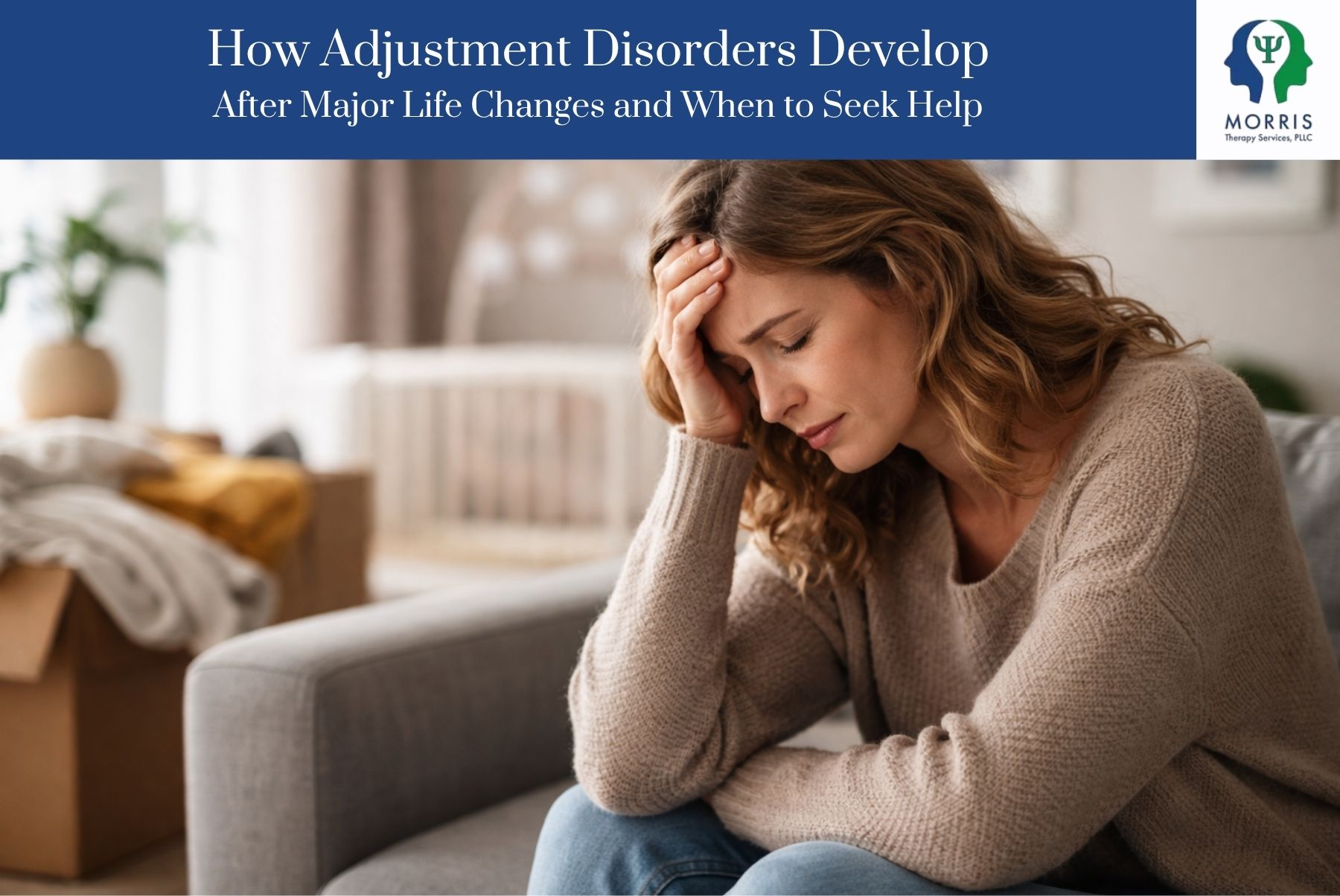
Life is full of transitions—some expected, others sudden and overwhelming. While many people adapt over time, certain changes can trigger intense emotional or behavioral responses that feel difficult to manage. When stress from life events becomes overwhelming and persistent, it may develop into what mental health professionals call an adjustment disorder.
At Morris Therapy Services, PLLC, we help individuals in Tampa and surrounding communities navigate these challenges with compassionate, evidence-based care. Understanding how adjustment disorders develop—and when to seek help—can be the first step toward healing and resilience.
What Is an Adjustment Disorder?
An adjustment disorder is a stress-related mental health condition that occurs when someone has difficulty coping with a significant life change or stressful event. These reactions go beyond typical stress and can interfere with daily functioning, relationships, and overall well-being.
Unlike other mental health disorders, adjustment disorders are directly tied to a specific stressor and typically begin within three months of the event.
Common Life Changes That Can Trigger Adjustment Disorders
Major life transitions can disrupt emotional balance, even when they are positive. Common triggers include:
- Divorce or relationship challenges
- Job loss or career changes
- Moving to a new city or state
- Financial difficulties
- Serious illness or injury
- Loss of a loved one
- Becoming a parent
- Retirement
- Academic pressures or changes
Even positive milestones—like a promotion or marriage—can create unexpected emotional strain.
How Adjustment Disorders Develop
Adjustment disorders develop when the stress of a life change overwhelms a person’s ability to cope effectively. Several factors contribute to this:
1. Individual Coping Skills
Everyone processes stress differently. Limited coping strategies can make transitions feel unmanageable.
2. Support System
A lack of emotional support from friends, family, or community can intensify feelings of isolation.
3. Past Experiences
Previous trauma or unresolved stress can make new challenges harder to navigate.
4. Biological and Psychological Factors
Personality traits, mental health history, and even genetics can influence how someone responds to change.
Signs and Symptoms of Adjustment Disorders
Symptoms can vary but often include emotional and behavioral changes such as:
Emotional Symptoms
- Persistent sadness or hopelessness
- Anxiety or excessive worry
- Feeling overwhelmed or unable to cope
- Frequent crying
Behavioral Symptoms
- Withdrawal from social activities
- Difficulty concentrating
- Changes in sleep or appetite
- Avoiding responsibilities
Physical Symptoms
- Fatigue
- Headaches or body aches
- Digestive issues
If these symptoms persist or worsen, it may be time to seek professional support.
When to Seek Help
It’s normal to feel stressed during life changes—but there are clear signs that indicate professional help may be beneficial:
- Symptoms last longer than a few weeks or intensify over time
- Daily functioning (work, school, relationships) is affected
- You feel stuck or unable to move forward
- You experience frequent anxiety, sadness, or irritability
- You begin to withdraw from loved ones
- You turn to unhealthy coping mechanisms (e.g., substance use)
Seeking help early can prevent symptoms from becoming more severe and improve long-term outcomes.
How Therapy Can Help
At Morris Therapy Services, PLLC, therapy is tailored to your unique situation and goals. Treatment may include:
Cognitive Behavioral Therapy (CBT)
Helps identify and change negative thought patterns that contribute to stress and anxiety.
Stress Management Techniques
Learn practical tools to regulate emotions and reduce overwhelm.
Supportive Counseling
Provides a safe, nonjudgmental space to process life changes and emotions.
Building Resilience
Develop coping strategies that strengthen your ability to handle future challenges.
The Importance of Early Intervention
Ignoring symptoms of an adjustment disorder can lead to more serious mental health concerns such as depression or anxiety disorders. Early intervention helps:
- Restore emotional balance
- Improve relationships
- Increase confidence and coping skills
- Prevent long-term mental health issues
You don’t have to navigate life’s changes alone—support is available.
Frequently Asked Questions (Q&A)
Q: How long does an adjustment disorder last?
A: Symptoms typically begin within three months of a stressor and often resolve within six months after the stressor or its consequences end. However, ongoing stress can prolong symptoms.
Q: Is an adjustment disorder the same as depression?
A: No. While symptoms may overlap, adjustment disorders are directly tied to a specific life event. Depression may occur without a clear external trigger and often lasts longer.
Q: Can adjustment disorders go away on their own?
A: In some cases, yes. However, therapy can significantly speed up recovery and prevent symptoms from worsening.
Q: Who is at risk for developing an adjustment disorder?
A: Anyone can develop one, but those with high stress levels, limited support systems, or prior mental health challenges may be more vulnerable.
Q: What happens if I don’t seek treatment?
A: Symptoms may persist or evolve into more serious mental health conditions such as anxiety disorders or major depression.
Q: How do I know if therapy is right for me?
A: If your stress feels overwhelming, persistent, or interferes with daily life, therapy can provide valuable support and tools.
Q: Do you offer personalized treatment plans?
A: Yes. At Morris Therapy Services, PLLC, care is tailored to each individual’s needs, goals, and life circumstances.
Take the First Step Toward Healing
Life changes can be challenging—but they don’t have to define your well-being. With the right support, it’s possible to adapt, grow, and regain a sense of balance.
Contact Information
Morris Therapy Services, PLLC
5331 Primrose Lake Cir Ste 113
Tampa, FL 33647
📞 Phone: (813) 563-6430
🌐 Website: https://morristherapyservices.com
Request an Appointment:
https://morristherapyservices.com/appointments