
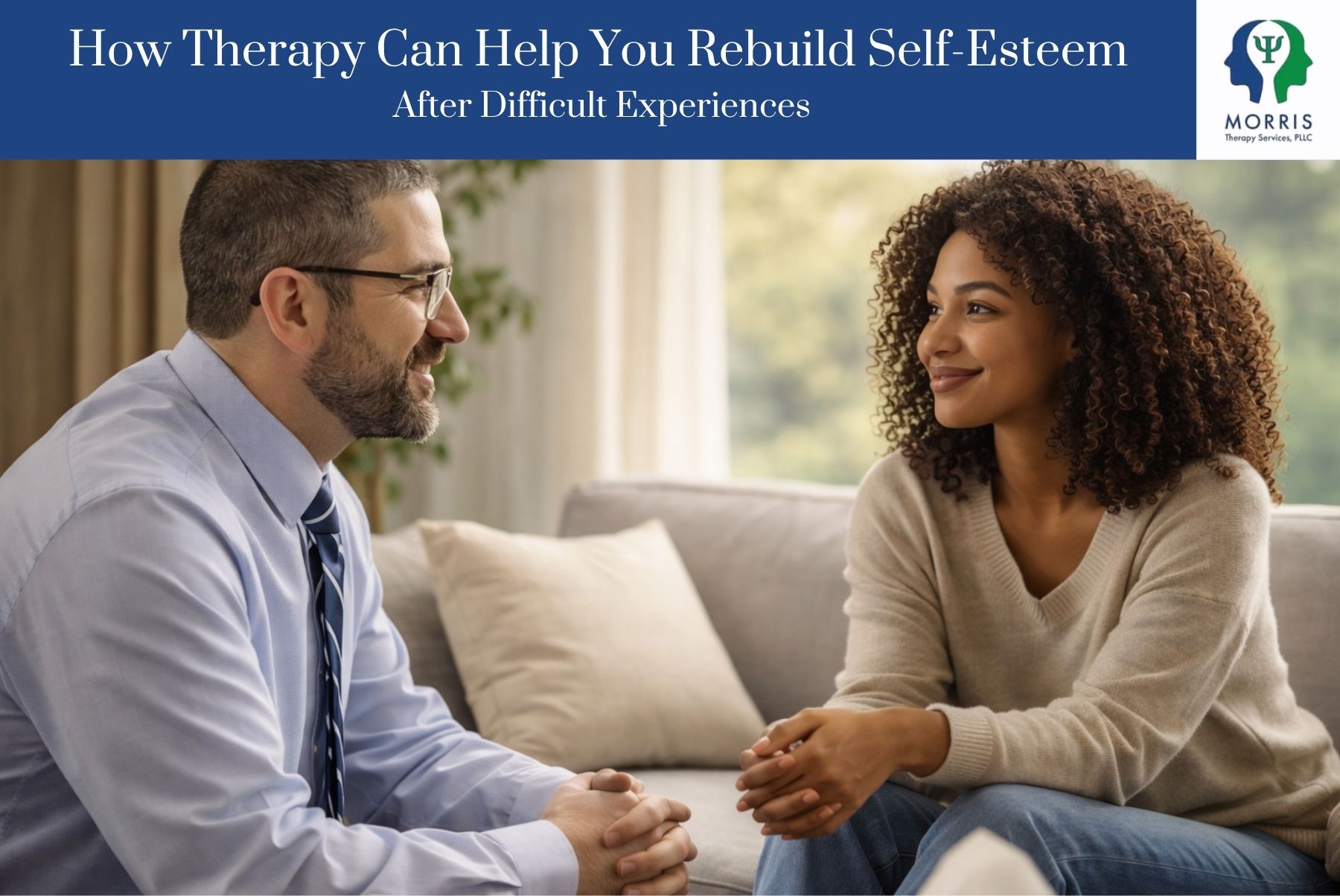
Life doesn’t always unfold the way we expect. Difficult experiences—such as trauma, loss, relationship challenges, abuse, or prolonged stress—can deeply impact how you see yourself. Over time, these experiences can chip away at your confidence, leaving you feeling unworthy, insecure, or disconnected from who you once were.
The good news is that self-esteem is not fixed. With the right support, it can be rebuilt—and often becomes even stronger than before. Therapy provides a safe, structured, and empowering space to help you rediscover your value, process past experiences, and move forward with confidence.
At Morris Therapy Services, PLLC, individuals are guided through this healing journey with compassion, expertise, and personalized care.
Understanding Self-Esteem and Its Impact
Self-esteem refers to how you perceive your own worth and abilities. When it’s healthy, you’re more likely to:
- Set boundaries
- Make decisions confidently
- Maintain fulfilling relationships
- Handle challenges with resilience
However, difficult experiences can distort this self-view. You may begin to:
- Doubt your worth
- Engage in negative self-talk
- Feel stuck in cycles of guilt or shame
- Avoid opportunities or relationships
These patterns are not permanent—they are learned responses that can be unlearned with the help of therapy.
How Difficult Experiences Affect Self-Esteem
Certain life events have a particularly strong impact on self-esteem, including:
- Emotional or physical trauma
- Toxic or abusive relationships
- Childhood neglect or criticism
- Major life transitions (divorce, job loss, relocation)
- Chronic stress or burnout
These experiences can create internal narratives like:
- “I’m not good enough.”
- “I don’t deserve happiness.”
- “I always fail.”
Therapy helps identify and challenge these beliefs so they no longer control your life.
How Therapy Supports Self-Esteem Recovery
1. Creating a Safe, Judgment-Free Space
One of the most powerful aspects of therapy is having a place where you can be fully yourself without fear of judgment. This emotional safety allows you to explore difficult thoughts and feelings openly.
2. Identifying Negative Thought Patterns
Therapists help you recognize harmful internal dialogue and cognitive distortions. Once identified, these thoughts can be reframed into healthier, more realistic perspectives.
3. Processing Past Experiences
Unresolved experiences often linger beneath the surface. Therapy provides tools to process and release these emotional burdens so they no longer define your self-worth.
4. Building Self-Compassion
Instead of harsh self-criticism, therapy encourages self-kindness. Learning to treat yourself with compassion is a cornerstone of rebuilding confidence.
5. Strengthening Boundaries
Healthy self-esteem includes knowing your limits and advocating for yourself. Therapy helps you develop assertiveness and protect your emotional well-being.
6. Reconnecting with Your Identity
After difficult experiences, many people feel like they’ve lost themselves. Therapy helps you rediscover your values, strengths, and sense of purpose.
7. Developing Practical Coping Skills
You’ll gain tools to manage anxiety, regulate emotions, and respond to challenges in healthier ways—reinforcing a stronger sense of control and confidence.
The Long-Term Benefits of Therapy
Rebuilding self-esteem isn’t just about feeling better—it’s about transforming how you live. With consistent support, you may experience:
- Improved relationships
- Greater emotional resilience
- Increased motivation and goal-setting
- Reduced anxiety and depression
- A stronger sense of self-worth
Over time, these changes create a more fulfilling and balanced life.
Why Choose Morris Therapy Services, PLLC?
At Morris Therapy Services, PLLC, the focus is on individualized care that meets you where you are. Their compassionate approach ensures that every client feels heard, supported, and empowered throughout their healing journey.
Whether you’re recovering from a difficult experience or simply looking to improve your self-confidence, their experienced team is dedicated to helping you build a healthier relationship with yourself.
Frequently Asked Questions (Q&A)
Q: How long does it take to rebuild self-esteem through therapy?
A: The timeline varies depending on your experiences and goals. Some people notice improvements within a few sessions, while deeper healing may take several months. Consistency is key.
Q: What types of therapy are used for self-esteem issues?
A: Common approaches include Cognitive Behavioral Therapy (CBT), trauma-informed therapy, and person-centered therapy. Your therapist will tailor the approach to your needs.
Q: Can therapy really change how I feel about myself?
A: Yes. Therapy helps rewire negative thought patterns, process emotional pain, and build healthier beliefs about yourself over time.
Q: What if I don’t know where to start?
A: That’s completely okay. Your therapist will guide you through the process, helping you explore your thoughts and experiences at your own pace.
Q: Is therapy only for people with severe issues?
A: Not at all. Therapy is beneficial for anyone looking to improve their mental health, gain clarity, or build confidence.
Q: Will I have to talk about everything right away?
A: No. Therapy moves at your comfort level. You decide what to share and when.
Q: How do I know if I need help with self-esteem?
A: If you frequently doubt yourself, feel unworthy, or struggle with confidence in relationships or decisions, therapy can be very helpful.
Take the First Step Toward Healing
Rebuilding self-esteem is a journey—but you don’t have to do it alone. With the right support, you can move beyond past experiences and rediscover your strength, confidence, and sense of self.
Contact Information
Morris Therapy Services, PLLC
5331 Primrose Lake Cir Ste 113
Tampa, FL 33647
Phone: (813) 563-6430
Website: https://morristherapyservices.com
Request an Appointment:
https://morristherapyservices.com/appointments