
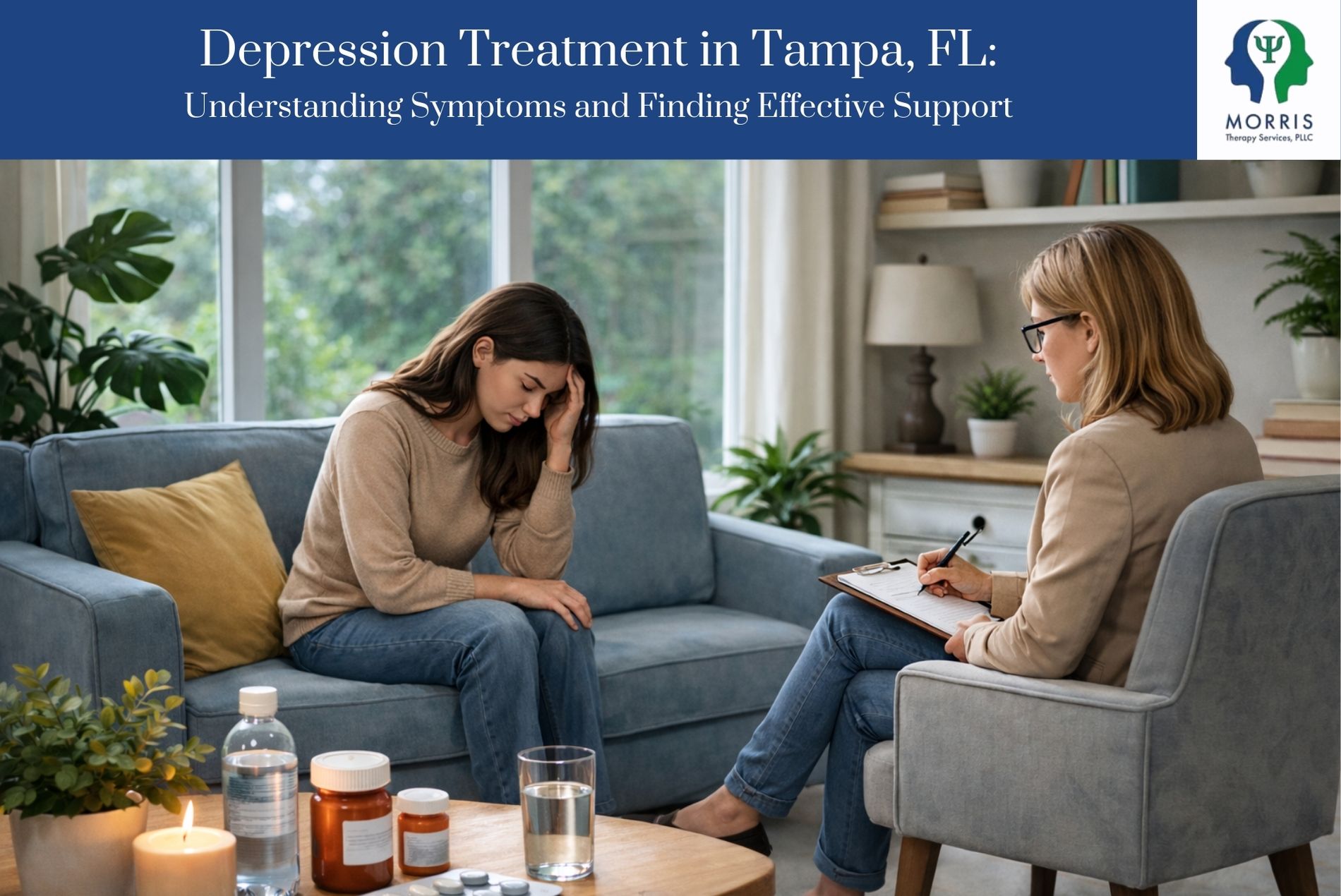
 Depression is more than just feeling sad. It can affect how you think, feel, sleep, work, and connect with others. When low mood becomes persistent and begins interfering with daily life, professional support can make a meaningful difference. At Morris Therapy Services PLLC, individuals struggling with depression receive compassionate, evidence-based care. Led by Dr. Jeffrey Morris, our Tampa practice helps clients regain clarity, motivation, and emotional balance.
If you are searching for “depression therapy Tampa,” “psychologist for depression near me,” or “treatment for depression Tampa FL,” this comprehensive guide explains the condition, its causes, and how therapy can help.
What Is Depression?
Depression, clinically known as Major Depressive Disorder, is a mood disorder characterized by persistent feelings of sadness, emptiness, or hopelessness. It affects how individuals think, process emotions, and experience daily life.
Depression is not a personal weakness. It is a treatable mental health condition influenced by biological, psychological, and environmental factors.
To meet diagnostic criteria, symptoms typically last at least two weeks and cause noticeable impairment in functioning.
Common Symptoms of Depression
Depression affects emotional, cognitive, physical, and behavioral functioning.
Emotional Symptoms:
Persistent sadness
Feelings of hopelessness
Loss of interest in previously enjoyed activities
Emotional numbness
Increased irritability
Cognitive Symptoms:
Difficulty concentrating
Indecisiveness
Negative self-talk
Excessive guilt
Feelings of worthlessness
Physical Symptoms:
Changes in sleep (insomnia or oversleeping)
Changes in appetite
Fatigue or low energy
Unexplained aches or pains
Behavioral Symptoms:
Withdrawal from social activities
Reduced productivity
Avoidance of responsibilities
Many individuals in Tampa initially attribute these symptoms to stress before recognizing a depressive pattern.
Types of Depression
Depression can present in different forms, including:
Major Depressive Disorder
Persistent Depressive Disorder (Dysthymia)
Seasonal Affective Disorder
Postpartum Depression
Depression related to medical conditions
Accurate assessment ensures the most appropriate treatment approach.
What Causes Depression?
There is no single cause. Depression often results from a combination of:
Genetic vulnerability
Neurochemical imbalances
Chronic stress
Traumatic experiences
Major life changes
Negative thinking patterns
Isolation
For some individuals, depression develops gradually. For others, it may follow a specific life event.
The Impact of Untreated Depression
When left untreated, depression can contribute to:
Relationship difficulties
Work impairment
Substance misuse
Increased anxiety
Chronic health issues
Decline in overall quality of life
Early intervention improves outcomes and reduces long-term complications.
Depression vs. Normal Sadness
It is important to distinguish between temporary sadness and clinical depression.
Normal sadness:
Is tied to a specific event
Improves with time
Does not severely impair functioning
Depression:
Persists beyond situational triggers
Impacts multiple areas of life
Includes cognitive and physical symptoms
Feels difficult to “snap out of”
If symptoms persist or worsen, professional support may be beneficial.
Evidence-Based Depression Treatment in Tampa
At Morris Therapy Services PLLC, treatment for depression is personalized and grounded in research-supported approaches.
Cognitive Behavioral Therapy (CBT)
CBT is one of the most effective treatments for depression. It focuses on identifying and restructuring negative thought patterns that maintain low mood.
Clients learn to:
Challenge self-critical thoughts
Develop balanced thinking
Increase behavioral activation
Break avoidance cycles
Behavioral Activation
Depression often leads to withdrawal from meaningful activities. Behavioral activation helps clients gradually re-engage with rewarding experiences, which improves mood over time.
Mindfulness-Based Techniques
Mindfulness strategies help individuals observe thoughts without becoming overwhelmed by them. This reduces rumination and emotional reactivity.
Problem-Solving Therapy
For clients experiencing situational stressors, structured problem-solving improves confidence and reduces helplessness.
What to Expect in Depression Therapy
Treatment begins with a thorough assessment to understand symptom patterns, history, and current stressors. Dr. Jeffrey Morris collaborates with clients to establish clear, measurable goals.
Therapy sessions may include:
Identifying negative thinking patterns
Developing coping strategies
Tracking mood and behavior changes
Addressing unresolved emotional experiences
Building resilience and self-compassion
Many clients begin noticing improvement within several weeks of consistent therapy.
Is Medication Necessary for Depression?
Some individuals benefit from antidepressant medication, while others respond well to therapy alone. The decision depends on symptom severity and personal preference.
Therapy can be effective as a standalone treatment or combined with medication under medical supervision.
How Long Does Depression Treatment Take?
Treatment duration varies based on symptom severity and individual goals. Many clients engage in therapy for 12–20 sessions, though some may benefit from longer-term support.
The goal is not only symptom reduction but also prevention of relapse.
When to Seek Help for Depression
Consider reaching out if you experience:
Persistent sadness lasting more than two weeks
Loss of interest in activities
Difficulty functioning at work or home
Frequent feelings of hopelessness
Changes in sleep or appetite
Thoughts of self-harm
If you are experiencing thoughts of self-harm or crisis, immediate emergency support is essential.
The Long-Term Benefits of Therapy
Effective depression treatment can lead to:
Improved mood stability
Increased motivation
Healthier relationships
Enhanced work performance
Better stress management
Renewed sense of purpose
Many individuals find that therapy provides tools they continue using long after treatment concludes.
Why Choose Morris Therapy Services PLLC in Tampa?
Individuals seeking depression treatment in Tampa choose Morris Therapy Services PLLC for:
Evidence-based therapeutic approaches
Personalized treatment planning
Compassionate and professional care
Confidential and supportive environment
Focus on sustainable emotional wellness
Dr. Jeffrey Morris works collaboratively with clients to reduce symptoms and foster lasting psychological health.
Frequently Asked Questions About Depression Therapy
How do I know if I am depressed or just stressed?
If low mood persists and interferes with daily functioning, professional evaluation can clarify.
Is therapy confidential?
Yes. Sessions are confidential in accordance with professional and legal standards.
Can depression return after treatment?
Life stressors may trigger symptoms, but therapy provides skills to manage recurrence effectively.
How soon will I feel better?
Many clients notice improvement within several weeks of consistent participation.
Schedule Depression Therapy in Tampa Today
If depression is affecting your quality of life, professional support can help you regain balance and direction.
Morris Therapy Services PLLC
5331 Primrose Lake Cir Ste 113
Tampa, FL 33647
Phone: (813) 563-6430
Website: morristherapyservices.com
Contact Dr. Jeffrey Morris today to schedule an appointment and begin your path toward improved mood and emotional well-being.